
How to Dye a Human Hair Wig at Home: Step-by-Step Guide for Beginners
Coloring a human hair wig lets you try a new shade without touching your own hair. The key is starting with the right base color and protecting the lace. This guide covers what you need, how to dye a wig step by step and how to keep the color looking fresh.
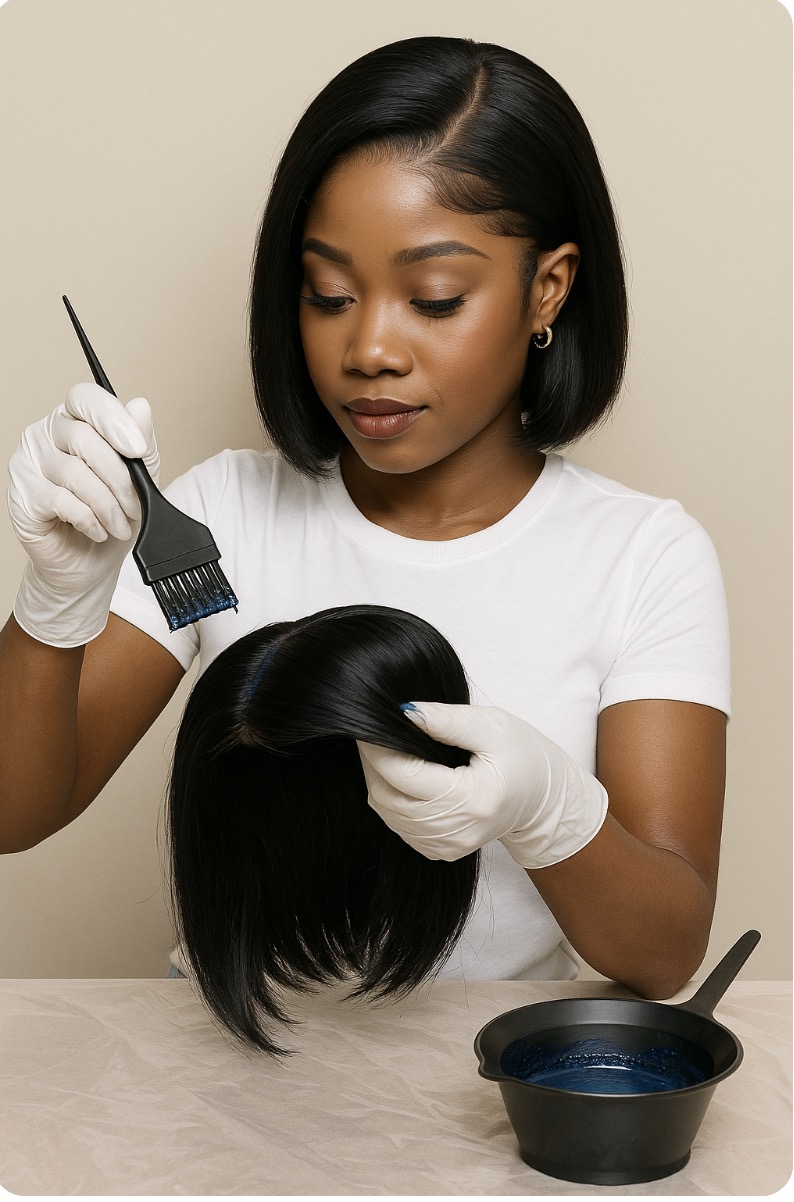
Start with the right base color
- Going light or bright (blonde, pink, copper, ombre): start with a pre-lightened #613 blonde unit. The hair is already lifted, so color goes on evenly and you skip bleaching. Shop 613 blonde lace wigs.
- Going darker or adding a rich tone (brown, burgundy, deep red): a natural black #1B unit works. Dark dye deposits easily on dark hair.
- Lifting dark hair to blonde yourself: not recommended at home. Bleaching dark hair weakens it, can turn it brassy and can damage the lace. Use a professional colorist.
Only human hair can be colored with regular hair dye. Synthetic wigs don't take hair color.
What you need
- Hair dye: semi-permanent for a temporary change, permanent for longer-lasting color
- 20 volume developer if you use permanent dye
- Mixing bowl, tint brush and gloves
- Wide-tooth comb and clips
- Wig stand or mannequin head and T-pins
- Plastic wrap or a processing cap
- Petroleum jelly or a lace protector
- Sulfate-free, color-safe shampoo and a deep conditioner
Step by step: how to dye a wig
- Wash and dry. Wash the wig to remove product buildup and let it dry about 80–90%.
- Protect the lace. Pin the wig to a stand and spread a thin layer of petroleum jelly or lace protector along the lace edges so dye doesn't stain the lace or knots.
- Do a strand test. Color a small hidden section first to check the shade and timing.
- Mix the color as the dye instructions say. For most permanent dyes that's 1 part color to 1 part developer.
- Section and apply. Clip the hair into four sections and apply color with a brush from about half an inch away from the lace down to the ends, in thin slices so every strand is covered.
- Process. Cover with plastic wrap and leave it for the time on the box, usually 30–40 minutes. Go by your strand test.
- Rinse cool, then condition. Rinse until the water runs clear, shampoo once with a color-safe shampoo and leave a deep conditioner on for 10–20 minutes.
- Air dry on the stand. Keep heat low for the first few washes.
Toning blonde wigs
If your #613 looks too yellow, a purple shampoo or a demi-permanent toner neutralizes the brassiness. Use it a few minutes at a time and check often. For shade ideas, see ash blonde vs platinum blonde.
Aftercare for colored wigs
- Wash with cool water and a color-safe, sulfate-free shampoo.
- Deep condition every wash, because colored hair dries out faster.
- Use heat protectant and low heat.
- Store away from sunlight to slow fading.
More in our lace wig care guide.
Common mistakes
- Skipping the strand test
- Getting dye or bleach on the lace and knots
- Using a stronger developer to speed things up
- Leaving color on longer than recommended
- Skipping the conditioner afterward
Before you color
Coloring is permanent, and hair that has been dyed or bleached can't be returned. Check our refund policy, and if you'd rather have a pro do it, find a stylist near Chicago.
FAQ
Can you dye a 613 wig darker?
Yes. 613 takes color well, including darker shades. Pre-lightened hair can grab color fast and very dark shades can come out uneven, so start with a strand test and a shorter processing time.
Can you use box dye on a wig?
Yes, on human hair wigs. Follow the box timing and protect the lace.
How long does wig color last?
Semi-permanent color fades over several washes. Permanent color lasts much longer with color-safe care.
Does dyeing affect the knots?
Dark dye on the knots makes them more visible. Keep color away from the lace, and if you want a scalp-like part, read how to bleach knots safely.